
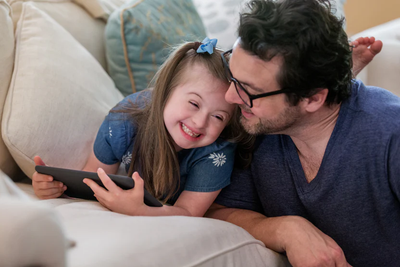




An appropriate outcome to address using visual supports is improving understanding, communication, and independence especially for individuals with learning or developmental differences. Visual supports help users follow routines, comprehend instructions, and manage transitions more effectively. They reduce anxiety, enhance focus, and promote consistent behavior by making expectations clear through images, charts, or symbols.
Why Visual Supports Work So Well
Think about road signs on the highway. They tell you what to do without using words. Visual supports work the same way for people who have trouble with spoken directions.
Many people learn better by seeing things than by hearing them. For folks with autism, IDD, or dementia, pictures make more sense than spoken words alone. A picture stays the same every time you look at it, but spoken words can sound different and confusing.
People with autism often have brains that work better with pictures than sounds. Research shows most people with autism are strong visual learners. For people with dementia or brain injuries, visual cues help when memory fades. A photo of a bathroom helps someone remember where to go even when they forget the word "bathroom."
Play Skills: The Top Outcome for Visual Supports
The National Professional Development Center on Autism reviewed all the research studies. They found that visual supports help most with play outcomes. No studies showed improvement in joint attention, vocational skills, or mental health when using only visual supports.
What Are Play Skills and Why They Matter
Play skills are how we interact with toys, games, and other people during fun activities. These include taking turns, sharing toys, following game rules, and playing cooperatively with others.
Play isn't just fun. When kids learn to play well, they also learn to make friends, work as a team, solve problems, and handle frustration. Learning through play helps kids grow into adults who work well with others.
How Visual Supports Help With Play
Picture cards show the steps for playing a game. Instead of trying to remember spoken directions, kids look at pictures to know what comes next.
Choice boards let kids pick which toy or game they want. This gives them control and helps them communicate their interests.
Social stories with pictures teach what to expect during playtime. Kids learn about taking turns or asking to join a game before they're in that situation.
A study in the Journal of Applied Behavior Analysis found that using the picture cue "Can I Play?" helped preschoolers with autism join play activities more often. The simple visual gave them the words needed to connect with other kids.
Other Important Outcomes Visual Supports Can Help
While play skills are the number one outcome, visual supports help with many other life skills.
Communication Skills
For people who struggle to speak or understand words, visual supports become their voice. Picture boards let someone point to what they need food, drinks, bathroom, or activities.
Visual schedules help people know what's coming next. This reduces questions and helps everyone stay on the same page.Communication boards and visual aids give people ways to share thoughts without relying only on words.
Research shows visual communication methods help older adults with dementia participate more in care decisions. Visuals help them express preferences when words become hard to find.
Behavior Management
Visual supports make expectations crystal clear. Visual rules show what behaviors are okay in different places. Token boards track progress toward rewards. First-then boards show activity order.
A study found that 85% of people showed behavior improvements when visual activity schedules were used. The clear structure helped them know what to do and when.
Social Skills
Social stories with pictures explain tricky situations like meeting new people or handling disagreements. Emotion charts help identify feelings. Visual scripts give exact words to use in social situations.
Daily Living Skills
Morning routine charts show each step from waking up to leaving the house. Cooking instructions with photos guide someone through meals. Safety reminders help remember important rules.
For individuals withintellectual and developmental disabilities, step-by-step visual guides build confidence and independence.
Academic and Motor Skills
Graphic organizers help students organize thoughts. Visual instructions break assignments into smaller steps. Visual timers show how much time is left.
Exercise guides with pictures show proper form for movements. TheEngage Spark program uses interactive maps to help children develop motor skills in fun ways.
Visual Supports for Different Conditions
Different conditions benefit from visual supports in unique ways.
Autism and Neurodiversity
People with autism are often strong visual learners. Studies show children with autism have better visual search skills than kids without autism. They notice details in pictures others might miss.
Visual supports work with their natural abilities.MapHabit's cognitive support tools provide personalized visual guides that help individuals with autism build independence.
Intellectual and Developmental Disabilities
People with IDD benefit from concrete visuals. Abstract concepts become real in pictures. Visual supports reduce memory load instead of remembering steps, someone follows the visual guide.
Research shows 75% of people using visual supports improved in independence.Support systems for IDD use audio-visual guides to build routines and life skills.
Dementia and Alzheimer's Disease
As dementia progresses, language skills decline but visual recognition stays stronger longer. People might forget words but still recognize faces and objects in photos.
Visual reminders help with daily tasks. Memory books with family photos help maintain connections. Visual supports reduce anxiety—knowing what happens next provides security.
Dementia-specific cognitive support provides visual mapping to enhance quality of life.
Traumatic Brain Injury
After brain injury, processing information becomes harder. Visual supports lighten this load. Step-by-step guides help with tasks that used to be automatic. Visual schedules provide structure when memory is unreliable.
Types of Visual Supports and What They Help
Different visual supports address different outcomes.
Visual Schedules
Visual schedules show the order of activities throughout the day. They help by reducing anxiety about what comes next, making transitions smoother, building independence, and teaching time concepts.
A full-day schedule might show pictures of breakfast, school, lunch, play, dinner, and bed. A mini-schedule shows just the steps for washing hands.
Visual Boundaries
Visual boundaries show where activities happen and what's expected in different spaces. They help people stay in appropriate areas and understand behavior expectations.
Tape on the floor might show a reading area separate from a play area. A carpet square shows where to sit during circle time.
Visual Cues and Choice Boards
Visual cues are pictures or symbols that give information. They help with following directions, remembering steps, and understanding expectations.
Choice boards display options so someone can pick what they want. They help communicate preferences, make decisions, and reduce frustration.
Social Stories
Social stories use pictures and simple text to explain social situations. They help prepare for new experiences, understand social rules, and reduce anxiety about unfamiliar situations.
A social story about the dentist might show the waiting room, the chair, and teeth cleaning. Reading it before the visit helps someone know what to expect.
Token Boards and First-Then Boards
Token boards track progress toward earning rewards. They help with staying motivated and understanding cause and effect.
First-then boards show what needs to happen before a preferred activity. The board shows "First homework" and "Then video games." The visual makes the deal clear.
How to Choose and Use Visual Supports
Picking the right visual support depends on your goal and who will use it.
Consider Your Goal
Start by thinking about what you want to improve. Are you working on communication, behavior, independence, social skills, or learning? Your goal guides which visual support to try.
Make It Personal
Use photos of the actual person, places, and objects they'll encounter. A picture of their own bathroom works better than a generic picture. Include their interests—if someone loves trains, use train-themed visuals when possible.
Start Simple and Track Progress
Begin with one visual support for one specific situation. Watch how it works and make changes based on what you see. Track specific outcomes like how many times a person completes tasks independently or how smoothly transitions happen.
If you see progress after a few weeks, keep going. If nothing changes, ask if the visual is clear enough, if the person understands it, and if all adults use it consistently.
Getting Started
Your phone camera is powerful. Take photos of daily activities, favorite toys, and important places. Many websites offer free printable visual supports. Apps and digital tools offer flexible options too.
MapHabit's platform provides comprehensive audio-visual guides and customizable step-by-step maps with over 1,000 pre-made options.
Making Visual Supports Work Better
Be consistent—use the same visuals across different places. Stand behind the person when introducing visuals so they focus on the support, not you. Fade prompts quickly as they start using visuals independently. Update visuals as the person grows and changes.
The Science Behind Visual Supports
Research strongly supports using visual supports for better outcomes. The National Professional Development Center on Autism reviewed 18 single-case studies and found visual supports meet criteria for evidence-based practice.
The research showed visual supports work for preschoolers through young adults with autism, IDD, brain injuries, and dementia.
Proven Outcomes
Studies in peer-reviewed journals demonstrate specific results:
Play outcomes: Multiple studies showed increased play engagement and social play behaviors with visual support.
Communication: Visual support led to increased initiations, requests, and overall communication attempts.
Behavior: Problem behaviors decreased while positive behaviors increased with visual support use.
Independence: Studies found 75% improvement in independent task completion with visual support.
Social skills: Visual supports increased appropriate social interactions and decreased social anxiety.
A comprehensive analysis found 85% of participants showed positive outcomes when using visual activity schedules for daily living and social skills.
Why Visual Supports Work
The visual cortex takes up a large portion of the brain. We're wired to process visual information quickly.
For people with autism, research shows stronger visual processing compared to auditory processing. Visual information persists you can look at a picture multiple times, but spoken words disappear.
Visual supports reduce cognitive load. When information is external rather than held in memory, the brain has more resources for other tasks.
Support for Families and Care Partners
Families don't have to figure this out alone. Help is available through local autism centers, school districts, and healthcare providers.
Technology Solutions
Digital platforms make visual support easier to create and use.MapHabit's cognitive support tools provide ready-to-use visual maps and personalized step-by-step guides. With over 1,000 pre-made maps and custom options, families have instant access to visual support.
The platform works on tablets and includes audio-visual guidance that combines pictures with simple spoken directions.
Funding Options
Many families can access visual support tools through state waiver programs. Check your state'sfunding opportunities to see if you qualify for financial assistance.
Healthcare organizations increasingly recognize the value of visual supports.Solutions for organizations help providers implement visual support systems across programs.
Building a Complete Support System
Visual supports work best as part of a broader support approach. When everyone in a person's life—family, caregivers, therapists, teachers, and healthcare providers uses visual support consistently, outcomes improve dramatically.
Visual supports work well alongside other evidence-based practices like positive behavior support, social skills training, and various therapies. Each approach strengthens the others.
Real-World Results
Research shows that effective visual support use leads to:
- 50% improvement in quality of life
- 75% increase in independence
- 35% reduction in caregiver burden
These numbers represent real people living fuller, happier lives with more control over their days.
Final Thoughts
Visual support helps with many important outcomes, but play skills rise to the top. Research clearly shows visual tools make the biggest difference in helping people learn to play and interact with others.
But the benefits extend far beyond play. Visual supports also improve communication, behavior, social skills, daily living abilities, and independence. They work across ages, settings, and conditions—from young children to older adults, from home to school to community.
The beauty of visual supports lies in their simplicity. A picture schedule, choice board, or social story can transform someone's day. These tools give people access to information in a format their brain understands naturally.
Whether you're a parent, teacher, therapist, or caregiver, visual supports belong in your toolkit. Start with one person, one goal, and one simple visual. Watch what happens, then build from there.
The research is clear and the evidence is strong. Visual supports work. They help people with autism, IDD, dementia, brain injuries, and other conditions live more independent, connected, and meaningful lives.
Ready to see how visual support can help?Learn more about evidence-based cognitive support tools that combine visual mapping with personalized guidance. Real people are achieving real outcomes with the right visual support system in place.