


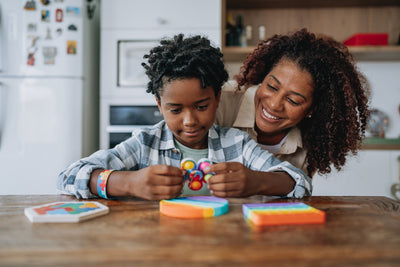


Anxiety is a big feeling that many autistic children deal with every day. About 40% of autistic kids struggle with anxiety disorders, which means nearly half of all children with autism feel worried or scared more often than other kids. But here's the good news—there are many simple ways you can help your child feel calmer and safer.
This guide will walk you through easy-to-understand strategies that really work. You'll learn how to spot when your child feels anxious, what makes them worried, and the best ways to help them feel better. We'll cover everything from daily routines to special tools that can make a big difference in your child's life.
Why Do Autistic Children Feel More Anxious?
Autistic children see and feel the world differently than other kids. This makes everyday things feel overwhelming sometimes.
The World Feels Too Loud and Bright
Many autistic children have sensory sensitivities to noises, bright lights, certain food textures, and busy places. Imagine wearing headphones that make every sound ten times louder. Or picture lights that feel like they're burning your eyes. That's how some autistic kids experience the world.
When their senses get too much input, their body goes into alarm mode. Their heart beats faster. They might feel sick to their stomach. This feeling is called sensory overload, and it can cause a lot of anxiety.
Changes Feel Scary
Changes in routine, like not going to a weekly piano lesson because the teacher is sick, or changes in environment, such as new furniture in different places at home, can trigger anxiety. For autistic children, knowing what comes next helps them feel safe. When things change without warning, it's like the floor disappearing under their feet.
Even small changes can feel big. A substitute teacher at school. A different route to the store. These things might seem small to us, but to an autistic child, they can feel like stepping into a strange new world.
Social Situations Feel Confusing
Social anxiety, or a fear of new people and social situations, is especially common among kids with autism. Making friends, having conversations, and understanding what other people mean—these skills don't come naturally to many autistic children.
They might worry about saying the wrong thing. They might not understand jokes or sarcasm. This can make birthday parties, playdates, and even recess feel stressful instead of fun.
How to Tell When Your Child Feels Anxious
Autistic children often can't tell you they're feeling anxious with words. Instead, they show you through their actions.
Physical Signs to Watch For
When your child feels anxious, you might notice:
- Their body gets tense or stiff
- They breathe faster than normal
- They sweat more
- They complain about tummy aches or headaches
- They have trouble sleeping or falling asleep
Children with autism may experience strong internal sensations of tension, including a racing heart, muscular tensions, sweating and stomachache.
Behavior Changes That Signal Anxiety
Because autistic children have difficulty recognizing their own anxious thoughts and feelings, they can't always tell you that they're feeling anxious. Instead, you might notice an increase in challenging behavior.
Watch for these signs:
- More stimming (hand flapping, rocking, spinning)
- Getting upset more easily
- Refusing to do things they normally do
- Running away or hiding
- Hurting themselves (hitting their head, biting their hands)
- Destroying things (ripping clothes or paper)
- Having more meltdowns than usual
Create Routines That Feel Safe
One of the best ways to reduce anxiety is to make your child's day predictable. When they know what comes next, they feel more in control.
Use Visual Schedules
Visual schedules with pictures of activities and times help children know what to expect and reduce anxiety levels. Think of it like a map for the day. Instead of wondering what happens next, your child can look at their schedule and see.
You can make a simple schedule with:
- Pictures of each activity (breakfast, school, playtime, dinner)
- The time each thing happens
- Check boxes they can mark off as they finish each activity
Put the schedule where your child can easily see it. Let them check off each activity as they complete it. This gives them a sense of control and accomplishment.
Prepare for Changes Ahead of Time
When you know something will be different, tell your child early. Use simple words and pictures to explain what will happen.
For example: "Tomorrow we're going to the dentist instead of the park. First we'll drive in the car. Then we'll sit in the waiting room. Then the dentist will look at your teeth. Then we'll go home."
The more specific you can be, the better. If possible, visit new places before the big day so your child knows what to expect.
Keep Daily Routines Consistent
Try to keep mealtimes, bedtimes, and other daily activities at the same time each day. This creates a rhythm that helps your child's body and brain relax.
If you need to change something, give as much notice as you can. Even saying "In five minutes, we're going to turn off the TV and have lunch" helps prepare them for the switch.
Help Your Child's Sensory Needs
Many autistic children feel anxious because their senses get overwhelmed. You can help by making changes to their environment and giving them special tools.
Create a Calm-Down Space
Create a safe space to calm down or regroup. Sensory deprivation or quiet areas change the amount of sensory input the child is exposed to. This could be:
- A corner of their bedroom with soft pillows and dim lights
- A closet with blankets and stuffed animals
- A tent with calming music
Make this space comfortable and inviting. Let your child go there whenever they feel overwhelmed. Never use it as punishment—it should always be a safe, positive place.
Use Deep Pressure Tools
Deep touch pressure through weighted wearables, compression garments, weighted blankets, or weighted lap pads has positive effects on reducing anxiety. Deep pressure feels like a big, gentle hug. It tells the nervous system to relax.
Try these tools:
- Weighted blankets for bedtime or quiet time
- Compression vests to wear during the day
- Weighted lap pads to use while sitting at school or during homework
- Tight hugs when your child wants them
Check with an occupational therapist at facilities like MapHabit to find the right weight for your child's size and age.
Reduce Sensory Overload
For children overwhelmed by excessive noise, offer ear defenders, calming earbuds, or allow them to use an MP3 player. Simple changes can make a big difference:
- For noise: Use noise-canceling headphones, play white noise, or create quiet zones
- For light: Dim the lights, use lamps instead of overhead lights, let them wear sunglasses indoors
- For touch: Let them wear soft, tagless clothes, avoid rough fabrics, respect their personal space
- For crowds: Arrive early or late to avoid busy times, take breaks in quiet areas
Build a Sensory Toolbox
Create a portable sensory toolbox to reduce sensory sensitivities and improve tolerance to stressful situations. Pack a bag with items that help your child calm down:
- Fidget toys (stress balls, fidget spinners, textured objects)
- Chewable jewelry or gum
- Favorite small toys
- Headphones
- A comfort object (small stuffed animal, soft cloth)
- A favorite snack
Keep this toolbox in the car or bring it when you go out. Your child can use these tools whenever they need help calming down.
Use Social Stories and Visual Supports
Social stories are short narratives that describe social situations, events, or expectations in a concrete and visual manner, helping children feel less anxious about what is going to happen. These simple stories use pictures and words to explain what will happen in different situations.
How to Create Social Stories
Make stories about situations that worry your child:
-
Going to the Doctor: "First, we will drive to the doctor's office. Then we will sit in the waiting room. The doctor will say hello. The doctor will check my ears and my throat. Then we will go home."
-
Meeting New People: "Sometimes I meet new people. They might say hello. I can say hello back or wave. It's okay if I feel nervous. Mom will be with me."
-
Trying New Foods: "Sometimes there's new food for dinner. I can look at it. I can smell it. I can try one bite. If I don't like it, I can eat something else."
Use photos, drawings, or pictures cut from magazines. Read the story with your child several times before the event. Let them keep the story to look at whenever they want.
Make Transition Cards
Pictures or videos of transitioning smoothly to the next activity can provide a positive example and help the child know what is coming up next. These are like mini social stories for daily switches.
Create cards that show:
- "First [current activity], then [next activity]"
- A picture of each activity
- A timer showing how much longer
Show your child the card a few minutes before you need to switch activities. This gives their brain time to prepare for the change.
Teach Calming Strategies
Your child can learn simple ways to calm themselves down when they start feeling anxious. The MapHabit platform offers products for autism and neuro conditions that can support these learning goals.
Deep Breathing Exercises
Breathing slowly tells the body to relax. Teach your child to:
- Breathe in slowly through their nose (count to 3)
- Hold their breath (count to 2)
- Breathe out slowly through their mouth (count to 4)
Make it fun by pretending to smell flowers (breathe in) and blow out birthday candles (breathe out). Practice when they're calm so they remember it when they're anxious.
Counting and Other Simple Tasks
Self-soothing strategies such as slowly counting to ten, deep breathing, meditation, or visualization techniques can help. These give the worried brain something to do:
- Count backward from 10 to 1
- Name 5 things they can see, 4 things they can touch, 3 things they can hear
- Squeeze and release their hands 10 times
- Push their hands together hard for 10 seconds
Movement Breaks
Sometimes anxiety needs to come out through the body. Give your child regular chances to move:
- Jump on a trampoline
- Swing on a swing set
- Do jumping jacks or run in place
- Push a heavy cart or carry something heavy
- Climb on playground equipment
Include regular movement breaks and try alternative seating like wobble cushions to allow fidgety movement. These activities help burn off nervous energy and reset the body.
Work With Professional Support
Sometimes anxiety needs more help than parents can provide alone. That's okay—and it's actually really common.
Cognitive Behavioral Therapy (CBT)
Modified cognitive behavioral therapy programs designed for autism have shown that remission of anxiety disorders is an achievable goal among children with autism. CBT teaches children to:
- Notice when they're feeling anxious
- Understand what thought or situation triggered the feeling
- Challenge worried thoughts with facts
- Face their fears slowly and safely
The cognitive component helps children change how they think about a situation, whereas the behavioral component helps children change how they react to a situation. For example, if your child thinks "The fire drill will hurt my ears and I'll cry and everyone will laugh," CBT helps them test this thought and find a better one like "The fire drill is loud but it only lasts one minute. I can wear my headphones and I'll be okay."
Exposure Therapy
Exposure therapy allows individuals to face their fears in a progressive manner. This means taking tiny steps toward the thing that scares them.
If your child is afraid of dogs:
- Look at pictures of dogs
- Watch videos of dogs
- See a dog from far away
- Stand near a calm dog
- Touch a calm dog with help
Each step happens only when your child is ready. They're in control. This teaches their brain that the scary thing isn't actually dangerous.
Occupational Therapy
Mental health occupational therapists can help your child with managing anxiety. Occupational therapists who specialize in sensory processing can:
- Figure out your child's specific sensory needs
- Create a "sensory diet" (a schedule of sensory activities)
- Teach coping strategies
- Help your child handle sensory input better over time
Organizations like MapHabit provide resources and support systems that work alongside professional therapy.
When to Consider Medication
Medicine can reduce anxiety symptoms in autistic children. It's usually recommended only when anxiety is affecting a child's everyday life and other strategies haven't reduced the anxiety enough. Talk to your child's doctor if:
- Anxiety stops them from doing everyday activities
- They can't go to school because of worry
- They hurt themselves or others when anxious
- Other strategies haven't helped after several months
Medication isn't the first choice, but for some children, it makes a huge difference when combined with therapy and other strategies.
Help at School and in the Community
Your child spends a lot of time away from home. Making those places autism-friendly helps reduce anxiety too.
Talk to Teachers and School Staff
Make sure your child's teachers and school staff understand their needs, including sensory sensitivities, anxiety triggers, and preferred communication methods. Share information about:
- What makes your child anxious
- What calming strategies work
- Warning signs that they're getting overwhelmed
- What helps them feel better
Create an Individualized Education Plan (IEP)
If eligible, work with the school to create an IEP that outlines specific needs and accommodations, including strategies for reducing anxiety. An IEP can include:
- Extra time to transition between activities
- A quiet place to take breaks
- Permission to use fidget toys or headphones
- Modified assignments during stressful times
- A buddy system for crowded areas like hallways
Learn more about educational support options through state funding programs that may be available.
Prepare for Public Outings
Going out in public can be hard. Make it easier by:
- Visiting new places during quiet times first
- Bringing your sensory toolbox
- Having a plan for if your child gets overwhelmed
- Taking breaks often
- Leaving early if needed—and that's okay
Tell your child ahead of time how long you'll be out and what will happen. Give them some control by letting them choose one fun thing to do or buy.
Common Anxiety Triggers and How to Handle Them
Let's look at specific situations that often cause anxiety and what you can do.
Trigger |
Why It's Hard |
What Helps |
Doctor or dentist visits |
Unfamiliar people, strange sounds, unpredictable touch |
Visit beforehand, show videos of what happens, bring comfort items, use numbing cream if needed |
Loud places (restaurants, stores) |
Too much noise, bright lights, crowds |
Go during quiet times, use headphones, take frequent breaks, shop online when possible |
School transitions |
New teachers, different classroom, changed schedule |
Visit the new room before school starts, meet the teacher early, create a photo book of the new setting |
Separation from parents |
Fear something bad will happen, need for security |
Start with short separations, always come back when promised, use a comfort object, video call if needed |
Birthday parties |
Social pressure, loud music, unexpected activities, sensory overload |
Arrive late/leave early, stay with your child, prepare with social stories, have a quiet space available |
Track What Works for Your Child
Every autistic child is different. What helps one child might not help another. Keep notes about:
- What situations make your child most anxious
- Which calming strategies work best
- How long it takes them to calm down with each method
- What warning signs appear before a meltdown
- Which environments are easier or harder
This information helps you spot patterns. You might notice your child does better in the morning than afternoon. Or that they handle new places better if they had a good night's sleep.
Share these notes with therapists, teachers, and doctors. The more everyone understands your specific child, the better they can help.
MapHabit offers care partner training programs that can help you develop and track effective strategies.
Take Care of Yourself Too
Parents of autistic children consistently score higher on stress indicators than other groups of parents, experiencing more depression, anxiety, and stress-related health problems. You can't pour from an empty cup. Taking care of yourself isn't selfish—it's necessary.
Ways to Manage Your Own Stress
- Join a support group for parents of autistic children
- Take breaks when you can
- Ask family and friends for specific help
- Get enough sleep (really!)
- Do something you enjoy every week
- Talk to a counselor if you need to
Highly-stressed parents have more trouble following their children's behavior plans and implementing autism interventions. When you feel calmer, you can help your child better.
Build a Support Network
You don't have to do this alone. Many people and resources can help:
- Other parents who understand what you're going through
- Autism support organizations that offer information and services
- Therapists and specialists who work with autistic children
- School counselors and special education teachers
- Online communities where you can ask questions and share experiences
- State waiver programs that might provide funding for services
MapHabit provides resources for both individuals and organizations supporting people with autism.
Progress Takes Time
Reducing anxiety doesn't happen overnight. Some days will be harder than others. That's normal and okay.
Celebrate small wins:
- Your child used a calming strategy on their own
- They tried something new without a meltdown
- They told you (in any way) that they were feeling worried
- A bad situation didn't last as long as usual
These small steps add up to big progress over time. Be patient with your child—and with yourself.
Final Thoughts
Anxiety is tough for autistic children and their families. But with the right support, tools, and strategies, your child can feel calmer and more confident. Remember these key points:
Start with the basics: Stick to routines, prepare for changes, and make the environment sensory-friendly.
Use tools that work: Visual schedules, weighted items, and sensory toolboxes give your child ways to manage their anxiety.
Teach calming skills: Deep breathing, counting, and movement breaks help your child feel more in control.
Get professional help when needed: Therapists who understand autism can make a real difference.
Take care of you: Your well-being matters too.
Every child with autism is unique. What works for one might not work for another, and that's okay. Keep trying different strategies until you find what helps your child. Trust your instincts—you know your child best.
If you need more support, consider exploring the products and services MapHabit offers for individuals with autism. You're not alone in this journey, and with patience and support, your child can learn to manage their anxiety and thrive.